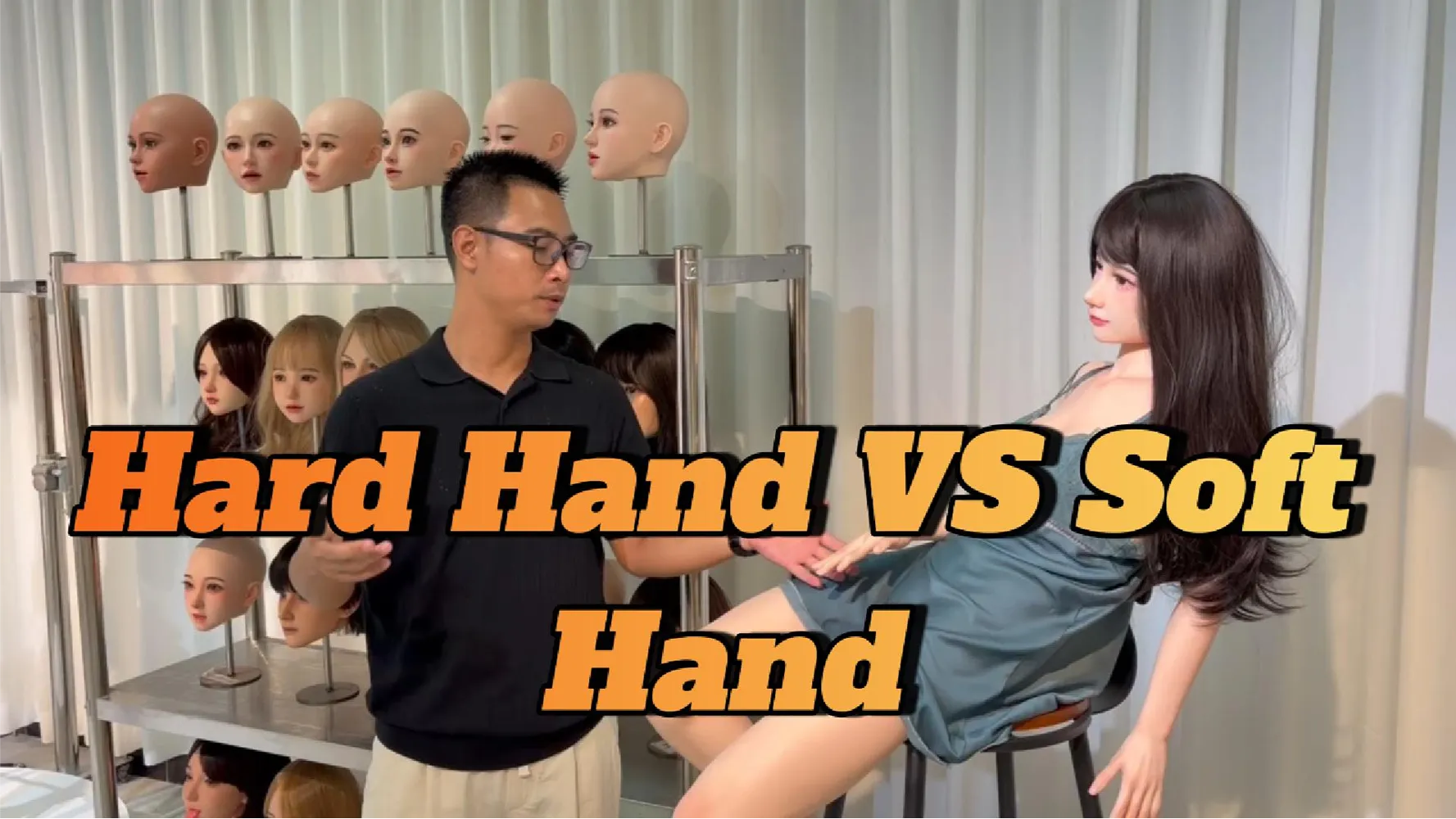
What Are Soft Feet?
Soft feet use a more flexible outer material. When you gently pinch the foot, it feels soft and elastic. You may also be able to feel the internal support structure through the surface.
The sole is also relatively soft, giving the foot a more natural, human-like feel.
Advantages of Soft Feet
- Soft and flexible feet and soles
- A more natural, human-like feeling when touched
- A suitable choice for users who prioritize realistic softness
- Capable of supporting short standing sessions and everyday poses
Things to Consider About Soft Feet
When a doll stands, most of its body weight is concentrated on the soles of its feet.
Because the soles of soft feet are relatively flexible, they are more likely to develop pressure marks, compression, or deformation after supporting the doll’s weight for an extended period.
Even if soft feet include a standing function, the doll should not remain standing for long periods. Standing sessions should be kept short, and the doll should always be placed on a flat, stable surface so that its weight is distributed as evenly as possible.
What Are Hard Feet?
Hard feet have a firmer and more solid structure. When touched or gently pressed, they feel harder and more stable than soft feet. This firmer construction allows them to provide better support while the doll is standing.
Because the soles are less likely to compress under pressure, hard feet usually provide greater stability during short standing sessions and standing poses.
Advantages of Hard Feet
- A firmer and more stable structure
- Better support when the doll is standing
- Lower risk of deformation during short standing sessions
- Greater stability when creating standing poses
- A practical choice for users who frequently pose their dolls
If you regularly use standing poses for photography or display, hard feet are generally the more practical option.
Can a Doll With Hard Feet Stand for a Long Time?
Although hard feet provide better support than soft feet, a doll should still not remain standing for an extended period.
When the doll’s full weight remains concentrated on the soles, even hard feet may gradually develop problems such as:
- Pressure marks on the soles
- Deformation of the feet or ankles
- Continuous pressure on the internal support structure
- Reduced standing stability over time
Hard feet improve standing support, but they are not designed to serve as permanent weight-bearing points. The standing function is more suitable for short poses, photography, and temporary displays than for long-term storage.
Soft Feet vs. Hard Feet: Key Differences
How Should You Choose Between Soft and Hard Feet?
Both soft and hard feet can provide a standing function, but they are suited to different priorities and usage habits.
Choose Soft Feet If:
- You prefer a soft and natural feeling
- You rarely leave the doll in a standing position
- You mainly use lying, sitting, or other non-weight-bearing poses
- You are prepared to handle the feet carefully
Choose Hard Feet If:
- You frequently use standing poses
- You want better support and stability
- You prioritize a firmer foot structure
- You want to reduce the risk of deformation while standing
- You regularly photograph or display the doll in a standing position
If standing poses are an important part of how you use the doll, hard feet are generally the better choice.
How to Let Your Doll Stand Safely
Regardless of whether you choose soft or hard feet, you should always pay attention to stability and weight distribution while the doll is standing.
Choose a Flat and Stable Surface
Do not place the doll on a sloped, soft, uneven, or slippery surface. An unstable surface can cause uneven pressure on the feet and increase the risk of falling or deformation.
Position Both Feet Correctly
Make sure both feet are resting firmly on the floor. The doll’s weight should be distributed as evenly as possible across both feet.
Avoid placing most of the weight on one foot, the toes, or the heels.
Avoid Prolonged Standing
The standing function is best used for temporary poses, photography, or short displays. After use, remove the pressure from the feet instead of using a standing position for long-term storage.
Adjust the Position Gently
Move the feet and ankles slowly when adjusting the pose. Avoid suddenly twisting the ankles or forcing the feet into unnatural angles, as this may damage the outer material or internal structure.
How Should the Doll Be Stored After Use?
After use, lay the doll flat in a natural position or use an appropriate hanging system.
When storing the doll, make sure to:
- Keep both feet in a natural and relaxed position
- Avoid leaving the feet bent at an unnatural angle
- Keep the soles away from sharp or uneven objects
- Do not place heavy objects on the feet
- Make sure the ankles are not twisted or under pressure
Proper storage helps reduce deformation caused by continuous pressure on the soles, feet, and ankles.
Final Thoughts
Soft feet provide a softer and more natural feeling, making them suitable for users who prioritize realistic touch and rarely use standing poses.
Hard feet have a firmer structure, provide better standing support, and are less likely to deform during short standing sessions. They are generally the better option for users who frequently use standing poses for display or photography.
However, neither soft nor hard feet should support the doll’s weight for extended periods. After use, lay the doll flat or hang it with a suitable suspension system to prevent continuous pressure on the feet.
Frequently Asked Questions
Can a Doll With Soft Feet Stand?
Yes. Soft feet can generally support standing, but their softer soles are more likely to deform under prolonged pressure. Standing sessions should therefore be kept short.
Are Hard Feet Better for Standing?
Generally, yes. Hard feet have a firmer structure and provide better support and stability. However, they should still not support the doll’s weight for long periods.
Can Hard Feet Deform?
Yes. Hard feet are less likely to deform than soft feet, but continuous pressure from the doll’s full weight may still cause marks or structural deformation.
Which Type Is Better for Frequent Posing?
Hard feet are usually more suitable for frequent standing poses because they provide better support and greater short-term stability.
Can the Doll Remain Standing Overnight?
It is not recommended. Whether the doll has soft or hard feet, long-term standing should not be used as a storage method. Lay the doll flat or use a suitable hanging system after use.











.webp)
.webp)
.webp)
.webp)
 E cup real skin texture silicone Sex Doll Torso Mila, ROS Head 120B (1).webp)
 E cup real skin texture silicone Sex Doll Torso Mila, ROS Head 120B (21).webp)
.webp)
.webp)
.webp)
.webp)
.webp)
.webp)
.webp)
.webp)